
Students will explore the growing trend of adults rediscovering childhood toys and hobbies, discussing why collecting has become so popular in recent years.
Main objectives of this material
- Develop sports vocabulary for success and winning, including phrases such as world champion, win the title, in a row, phenomenal season, be on a run, teammate, bright future and seize the opportunity, through a nine-item matching task, a nine-sentence gap-fill and flashcards.
- Strengthen listening and speaking skills by watching a news report about Kimi Antonelli, who won the 2026 Formula 1 drivers’ title for Mercedes at the age of 20, answering five multiple-choice questions (nine race wins, five in a row, the first Italian champion since 1953) and discussing why young champions face so much pressure.
- Learn and practise comparative and superlative adjectives such as younger, the fastest, the heaviest, more exciting, better and the best, using a five-row rule table and ten sentences about famous athletes to compare people, sports and results.
What students are going to cover
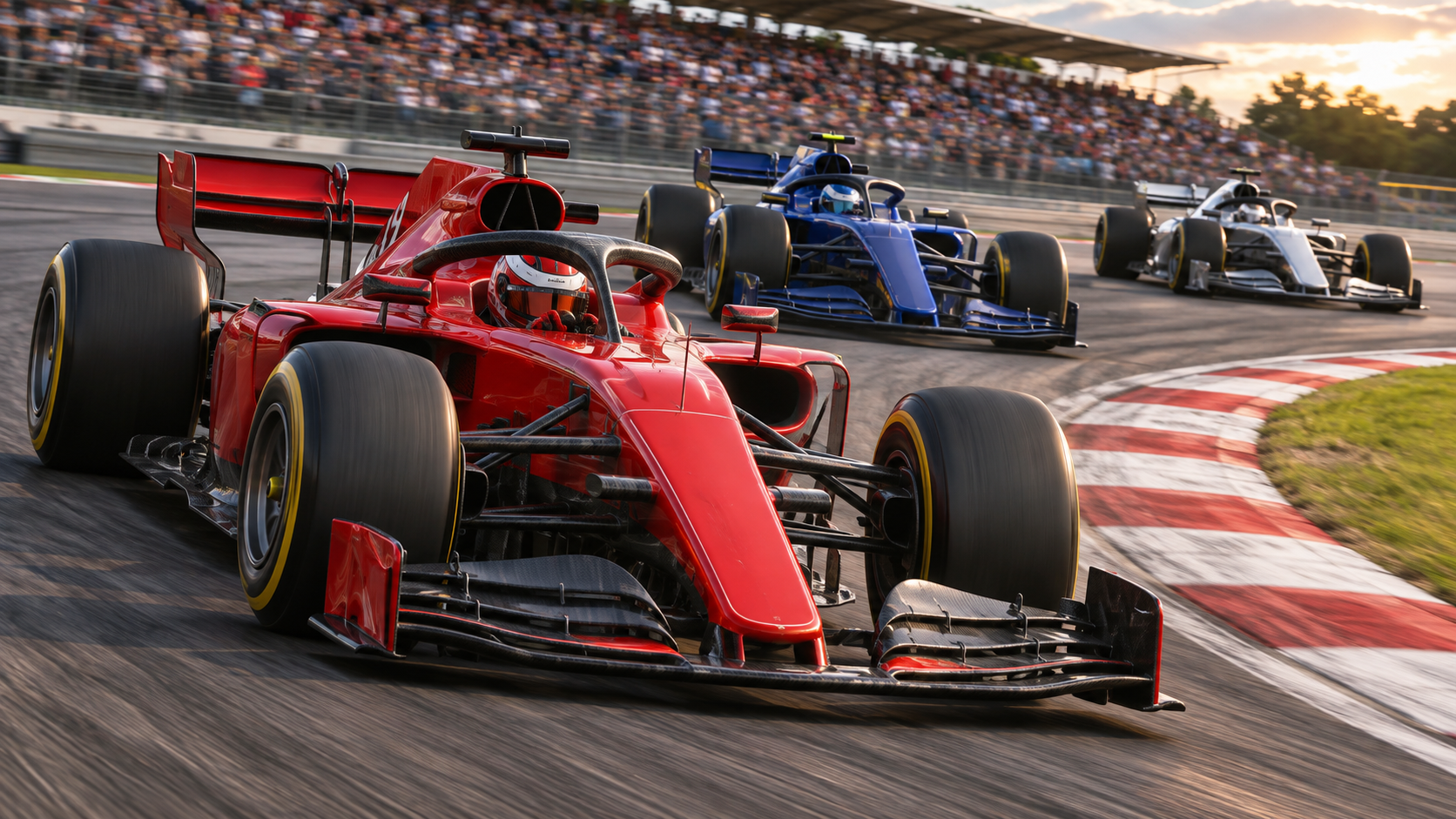
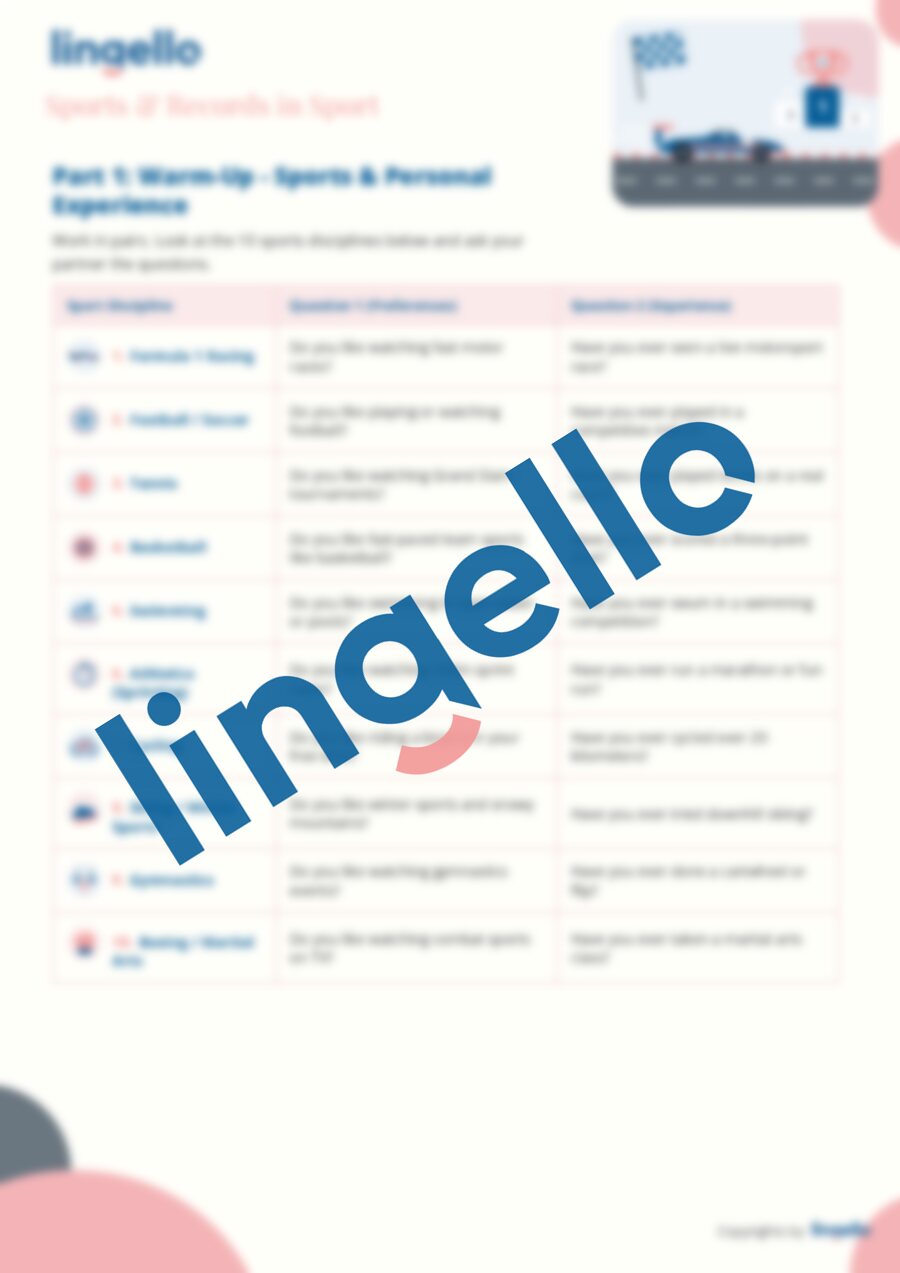
In this lesson, students will explore the world of sports records through the story of Kimi Antonelli, the youngest world champion in Formula 1 history. They start with a pair-work warm-up on ten sports disciplines, from Formula 1 and football to swimming, cycling and martial arts, asking Do you like...? and Have you ever...? questions about their own experience. Students then build vocabulary related to winning and success through a nine-item matching task, a nine-sentence gap-fill and four pair-practice questions. A short news video is followed by five multiple-choice questions and four class discussion questions about watching sport and young athletes. The grammar stage presents comparatives and superlatives in a rule table and practises them in a ten-item gap-fill about athletes such as Usain Bolt, Simone Biles and Novak Djokovic. The homework includes a vocabulary check and a four-item sports English grammar review, and the package adds a glossary, slides, flashcards and speaking cards. By the end of the lesson, learners will be able to describe their sports experiences, use nine phrases about winning, and compare athletes with -er / -est, more / the most and irregular forms.
🔒 Part of Complete · A2 · B1
Unlock this lesson with Complete
You are one step away from the full worksheet. Complete opens every lesson in the library, with new ones added every Sunday.
- Student Version PDF, print-ready, and an interactive fillable version
- Teacher Version with full answer key and teacher notes
- Presentation slides, glossary and a homework task
- Full access to every level, A1 to C2
Get Complete Start free with 10 lessons
Cancel anytime. Already a member? Log in to open this lesson.