
Master concise business English writing with this C1-C2 precision English lesson plan in which students turn 20 real work and life messages into one clear line the reader can act on from a phone notification, without losing facts, tone or the request, and then add exactly one nuance.
Main objectives of this material
- Develop advanced vocabulary related to protests and political unrest, including terms such as rocked by, take to the streets, show solidarity, descend into chaos, quash, placate, unprecedented and brutally repressed, practised through a ten-item matching task, a ten-sentence gap-fill and a podcast vocabulary table.
- Strengthen listening and media literacy skills by analysing the BBC report on Gen Z protests in India, France, Italy, Albania, Nepal and Bangladesh, answering a gist question and four detailed questions about events such as the removal of 130 million names from voter lists and the pink flamingo protests in Albania.
- Learn and practise the passive voice in journalism using were removed, being hit, are currently being called, have been organized and are expected to to report events while keeping the focus on actions and victims rather than agents.
What students are going to cover
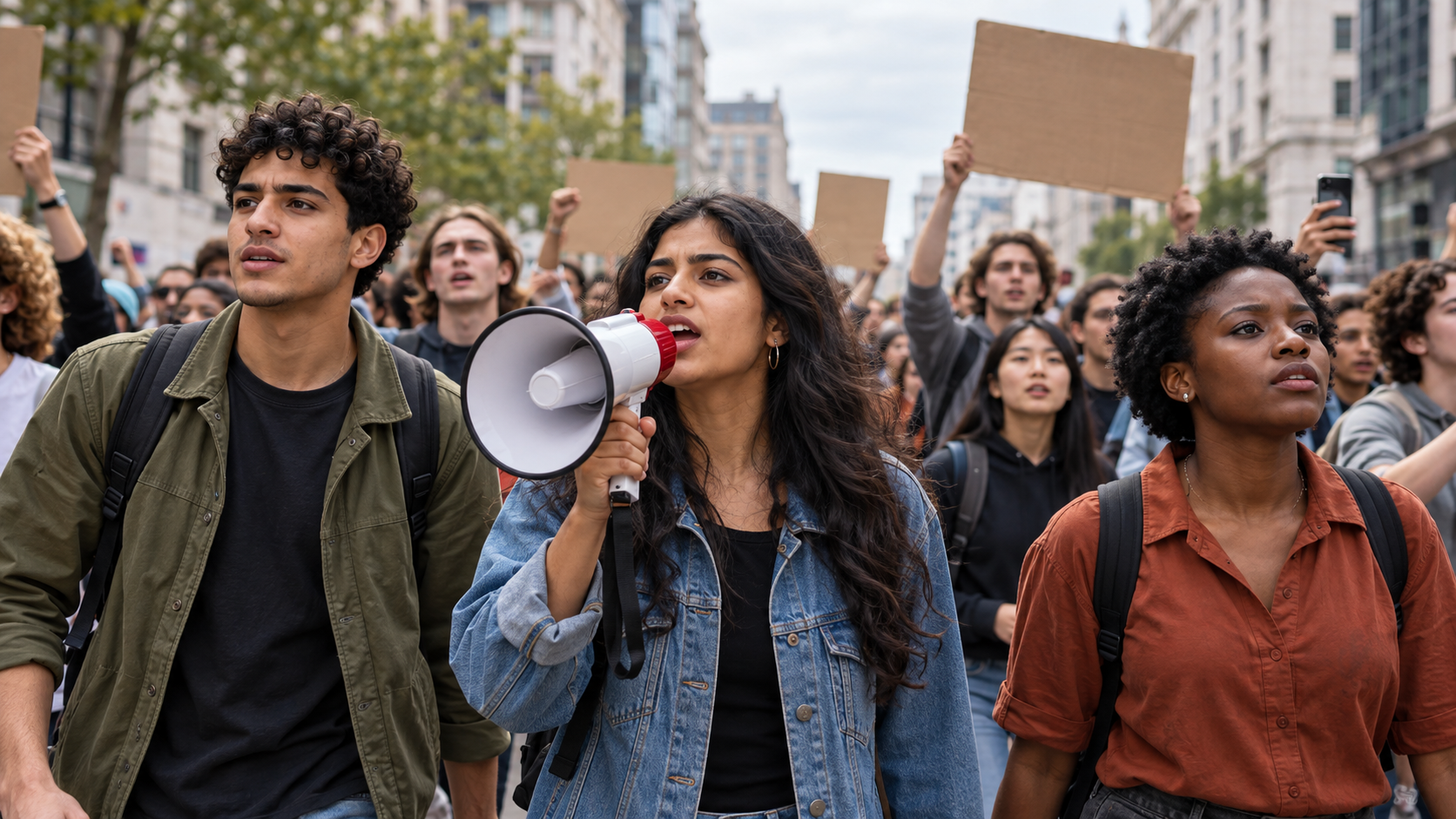
In this lesson, students will explore why young people around the world are protesting and what connects movements in different countries through the BBC World Service video Gen Z protests: What unites them?. They will build vocabulary related to protests, political unrest and youth activism in a ten-item matching task and a ten-sentence gap-fill, then strengthen listening skills with one gist question and four detailed comprehension questions. In the grammar stage of this current affairs English lesson plan, students rewrite ten active news statements in the passive voice, the structure journalists use to emphasise events and victims. A group discussion asks whether online solidarity leads to lasting political reform. The homework combines a 200-word news-style article on digital mobilisation with four comprehension questions, and a podcast add-on with a four-question multiple-choice listening quiz and six key terms such as satire and symbolic protest. The package also includes flashcards, speaking cards and slides. By the end of the lesson, learners will be able to describe protest events with precise vocabulary, report news events in the passive voice, and argue whether digital activism creates real political change
🔒 Part of Complete · B2 · C1
Unlock this lesson with Complete
You are one step away from the full worksheet. Complete opens every lesson in the library, with new ones added every Sunday.
- Student Version PDF, print-ready, and an interactive fillable version
- Teacher Version with full answer key and teacher notes
- Presentation slides, glossary and a homework task
- Full access to every level, A1 to C2
Get Complete Start free with 10 lessons
Cancel anytime. Already a member? Log in to open this lesson.