

Discover why asking simple questions can be a strategic advantage and learn the language of effective business communication.
Main objectives of this material
- Develop vocabulary related to psychology, personal growth, and self-perception, including terms such as imposter syndrome, negativity bias, merit, narcissism, and psychopathy.
- Improve speaking and critical thinking skills by discussing self-doubt, success, confidence, and workplace challenges, while expressing and defending personal opinions.
- Strengthen word formation and communication skills through vocabulary exercises, video comprehension tasks, a reflective speech, and a writing activity focused on confidence and professional development.
What students are going to cover
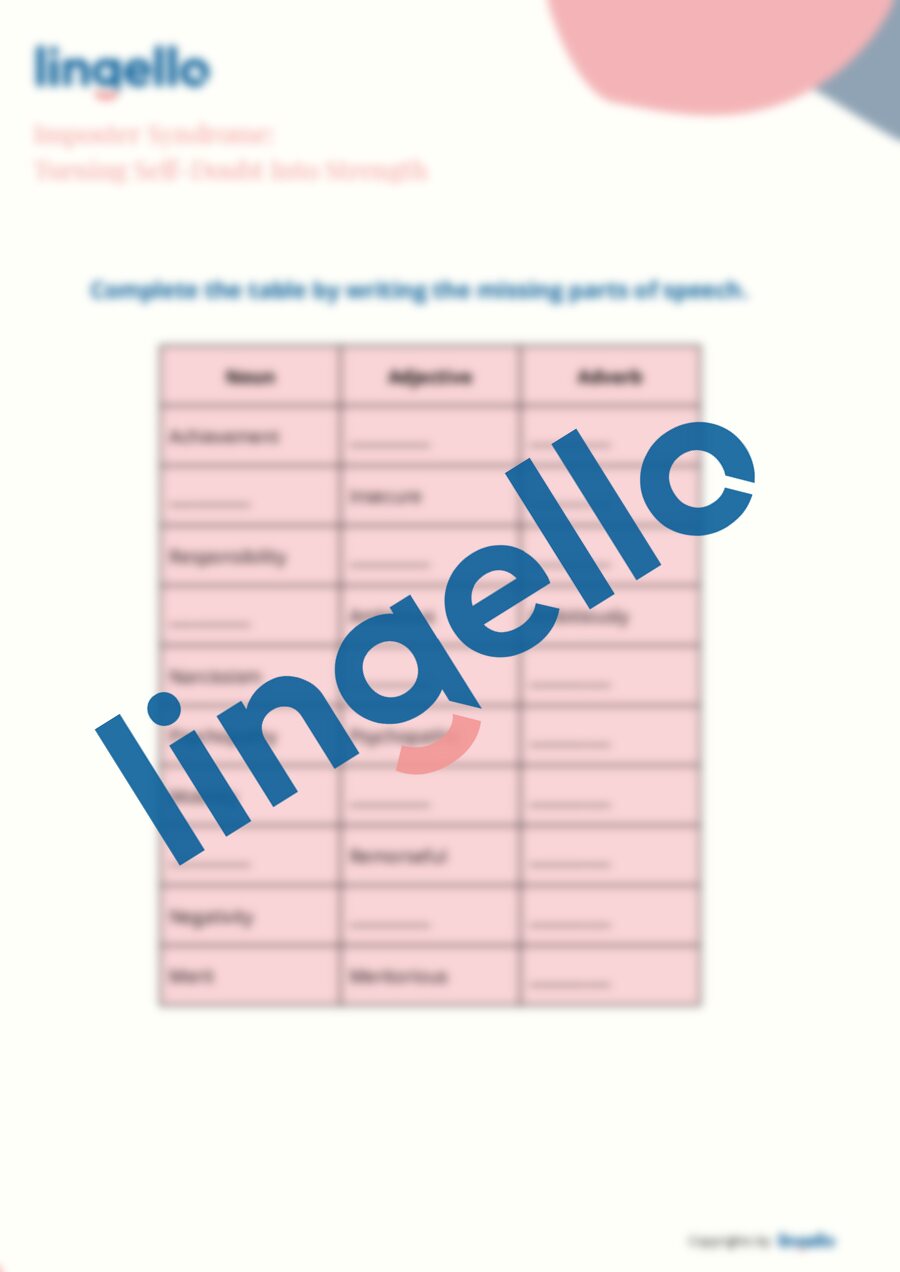
In this lesson, students will explore the concept of imposter syndrome and examine why successful people often struggle with self-doubt. They will learn psychology-related vocabulary, watch and discuss a video on confidence and achievement, and reflect on how negative thinking can affect personal and professional growth. Through speaking, word formation, and writing activities, students will build the language needed to discuss strengths, weaknesses, success, and self-belief while developing greater confidence in expressing complex ideas and personal experiences.
🔒 Part of Complete · C1
Unlock this lesson with Complete
You are one step away from the full worksheet. Complete opens every lesson in the library, with new ones added every Sunday.
- Student Version PDF, print-ready, and an interactive fillable version
- Teacher Version with full answer key and teacher notes
- Presentation slides, glossary and a homework task
- Full access to every level, A1 to C2
Get Complete Start free with 10 lessons
Cancel anytime. Already a member? Log in to open this lesson.