

Master causative have and get something done with this B1-B2 Business English lesson plan on causative structures and professional vocabulary, built around a corporate update about a company that has its servers inspected, its accounts audited and its marketing collateral printed by outside specialists.
Main objectives of this material
- Develop advanced vocabulary for describing charts and data trends, including expressions such as rise sharply, level off, a slight dip, peak at, fluctuate, and fall dramatically.
- Strengthen presenting, speaking, and writing skills by analysing a model one-minute business presentation, comparing a cluttered slide with a clear one, and describing sales and user data from line and bar charts.
- Learn and practise verb and noun patterns such as rose sharply and a sharp rise, prepositions with numbers such as by, to, and of, and signposting phrases such as As you can see from the chart to guide an audience through data.
What students are going to cover
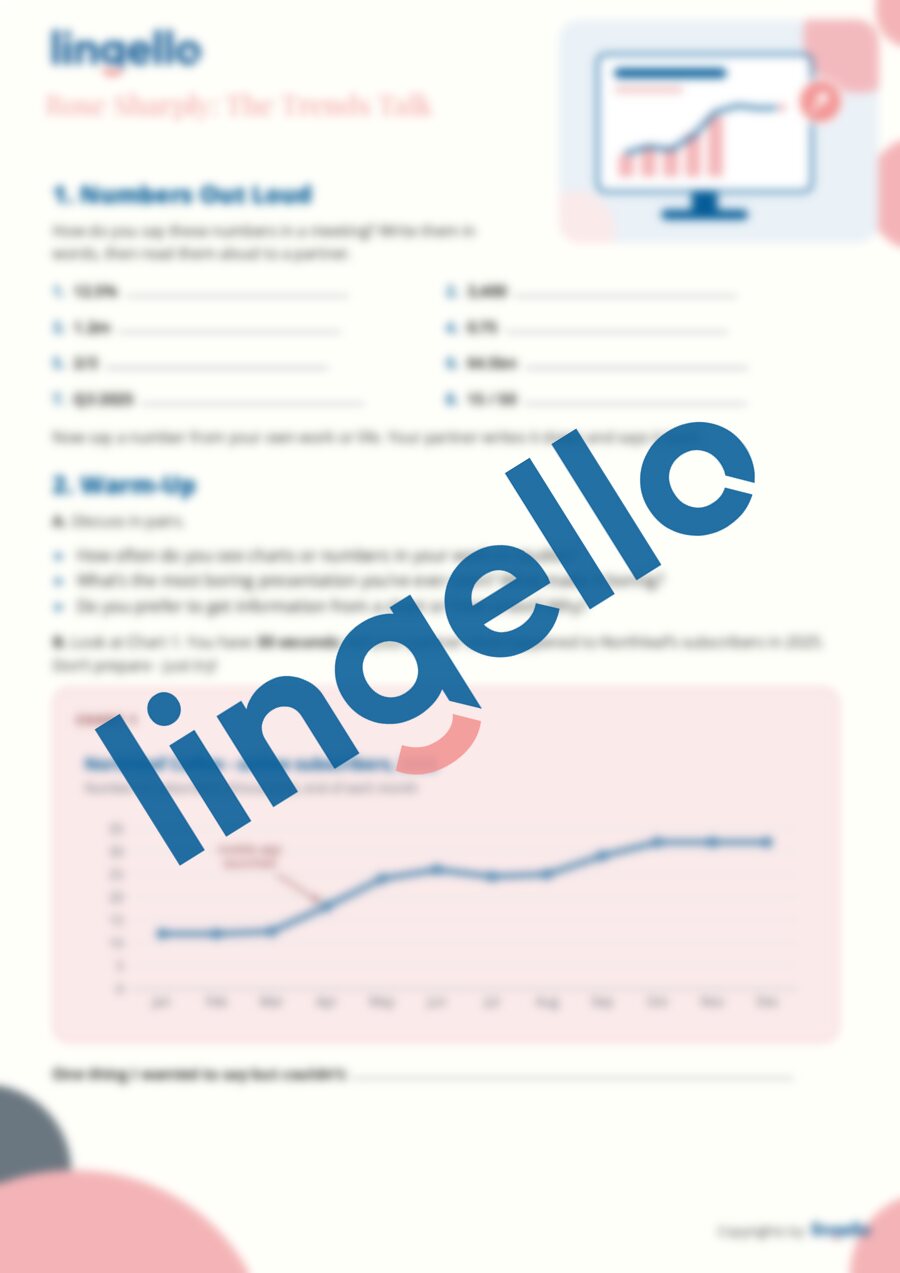
In this lesson, students will learn how professionals turn a chart into a short, persuasive message. Working with a Business English worksheet on describing trends, they will first describe a line chart with no help, then study a model one-minute presentation and notice the language that makes it work. They will build vocabulary for rises, falls, peaks, and plateaus, practise switching between verbs and nouns, and use prepositions with numbers accurately. Students will then compare two slides, write headline slide titles, and deliver their own one-minute presentation. By the end of the lesson, learners will be able to describe data precisely, design a clear slide with a headline title, and present a trend with confidence using phrases like This was mainly due to and The key takeaway is.
🔒 Part of Complete · B2
Unlock this lesson with Complete
You are one step away from the full worksheet. Complete opens every lesson in the library, with new ones added every Sunday.
- Student Version PDF, print-ready, and an interactive fillable version
- Teacher Version with full answer key and teacher notes
- Presentation slides, glossary and a homework task
- Full access to every level, A1 to C2
Get Complete Start free with 10 lessons
Cancel anytime. Already a member? Log in to open this lesson.